|
|
HMG Activity - 1
|
 |
Meetings of the
Hampshire Mills Group :
|
Saturday 7 December 2019
12.30pm |
Members Christmas Lunch Meeting
Tubbs Hall, Kings Worthy. Cost
£7.50 per head.
|
| |
|
|
Saturday 21 March 2020
2pm |
Members Meeting
Cancelled. |
Friday 12 June
3 - 6 pm |
Members Meeting
Cancelled. |
Friday 11 September
7.30 pm |
AGM and Members Meeting
|
| |
|
|
Saturday 12 December
1pm |
Members Christmas Lunch Meeting
|
| |
|
|
Nowadays we report on most of our trips in the Newsletter,
which is shown
here on the site.
A selection of visits include :
TIMS Post Tour of Denmark Sept 2011
Hampshire Water Festival July 2010
Stroud Valley Textile Mills trip May 2010
Day out on the Thames April 2010
Coker Rope Works April 2010
A Visit to Hockley Mill
Jan 2010
|
| |
|
Hampshire
Mills Group september 2009 visit to somerset
Six Hampshire Mills Group members
took part in a four day conducted tour which visited
eighteen watermills and two windmills. Most mills
were privately owned and special viewings were
granted to the organisers, the Mills Section of the
Society for the Protection of Ancient Buildings.
The two windmills were very similar in build and we
were able to climb up into Ashton Mill at Chapel
Allerton; however, Stembridge Mill near Ham Hill was
shrouded in scaffolding following extension
renovations which precluded an interior viewing of
this only remaining thatched tower mill.
|
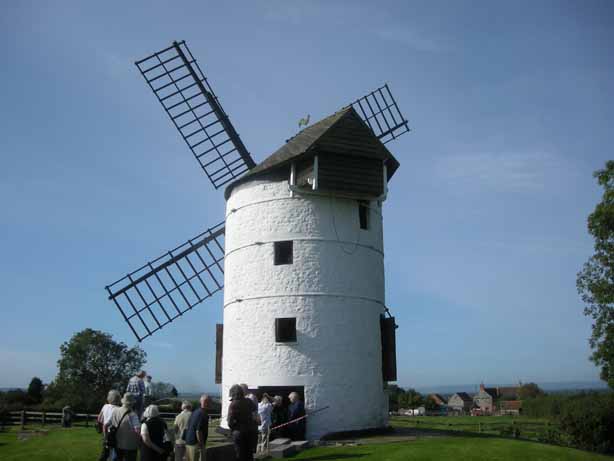
Ashton Mill Chapel Allerton |
|
The watermills varied in their
uses, design build and states of restoration; only
Burcott Mill, Wookey, is fully working, producing
stone ground, wholemeal flour. We explored former
sawmills at Timberscombe and Oakford (just over the
border into Devon) as well as mills which had been
important to their communities grinding flour at
Kingsbury Episcopi, Norton-sub-Hamdon, Crewkerne,
Bruton, Evercreech, Somerton, Ashill, Sampford
Brett, Williton, Allerford, Dunster, Exton,
Milverton and finally coming to a halt at Bishop’s
Lydeard. Owners of this last stop, Lower Mill,
Yvonne and Charlie Back had reconnoitered and
charted the route with author and researcher, Martin
Bodman. Basing us at the Holiday Inn, Taunton, they
did a superb job in setting up a very interesting
tour over and across a vast area of Somerset, so we
extend our very grateful thanks to them and all of
the mill owners, including the National Trust and
Sedgemoor District Council, as well as Simon Hudson
of S.P.A.B. Text and Photos by Sheila Miles
Viner |
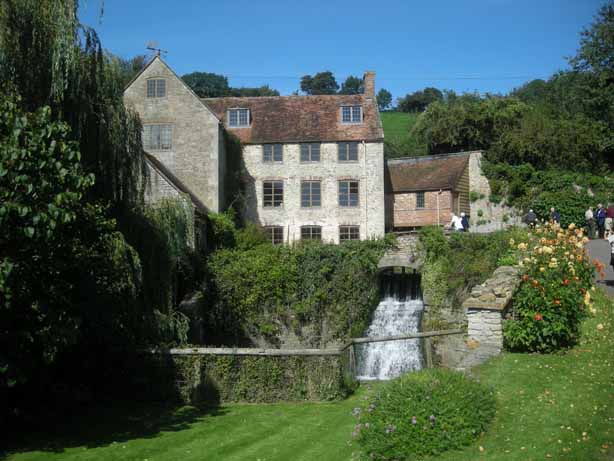
Gants Mill |
| |
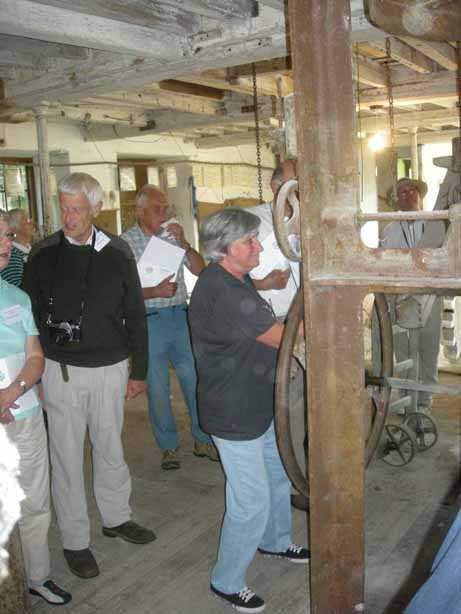
Gants Mill : Mildred Cookson gets to grips with the
handle
|
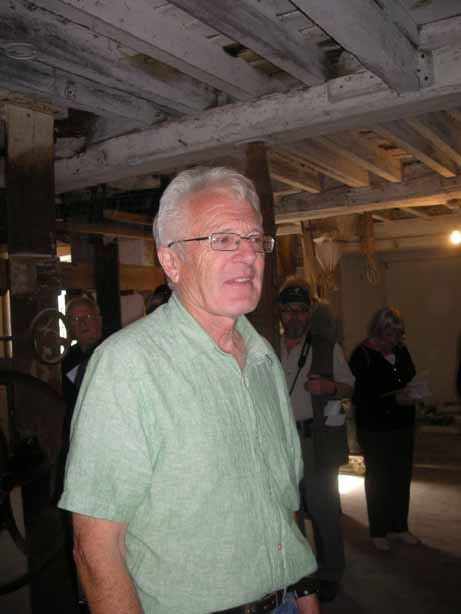
Gants Mill Owner Brian Shingler
|
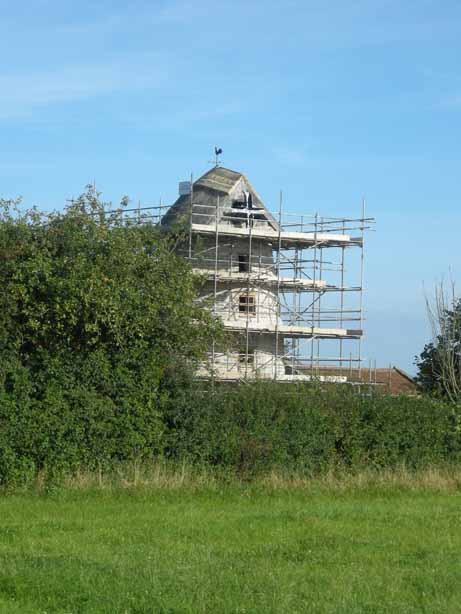
Stembridge Mill High Ham
|
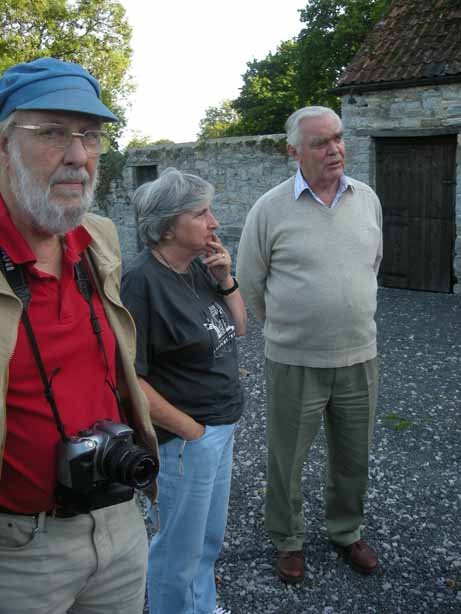
Rowlands Mill, Ashill : owner tells Mildred and Jim
all about it
|
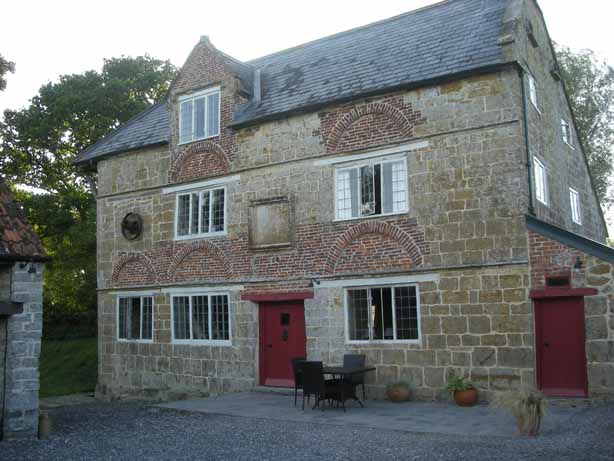
Rowlands Mill, Ashill
|
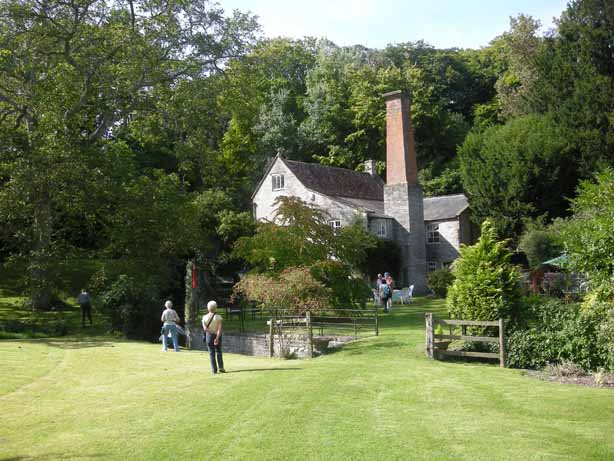
Somerton Mill
|
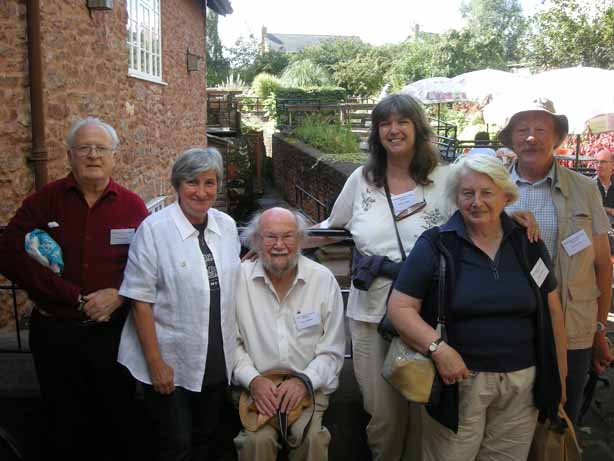
HMG Contingent !
|
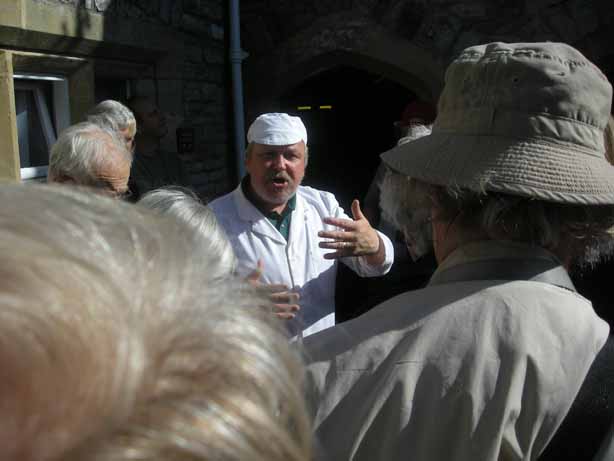
Burcott Mill Wookey,
Owner Ian Burt
|
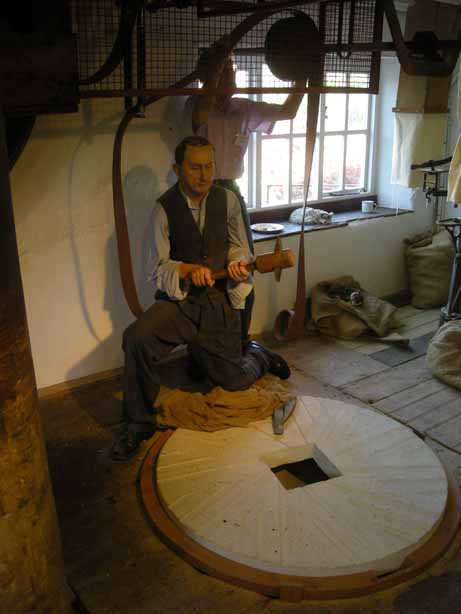
Demonstration of stone dressing at Lower Mill
Bishops Lydeard |
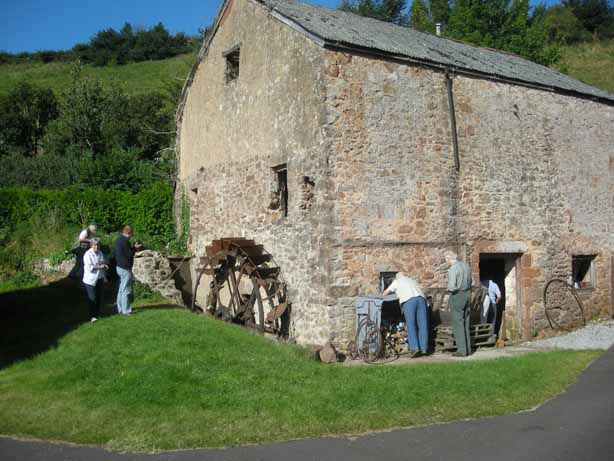
Sampford Mill |
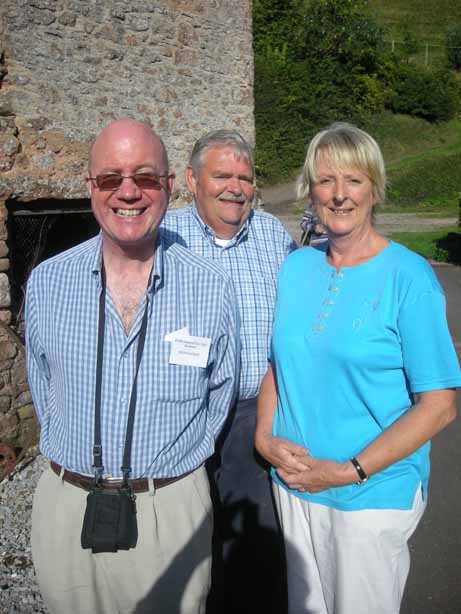
Sampford Mill owners Richard and Marion Gray with
Simon Hudson |
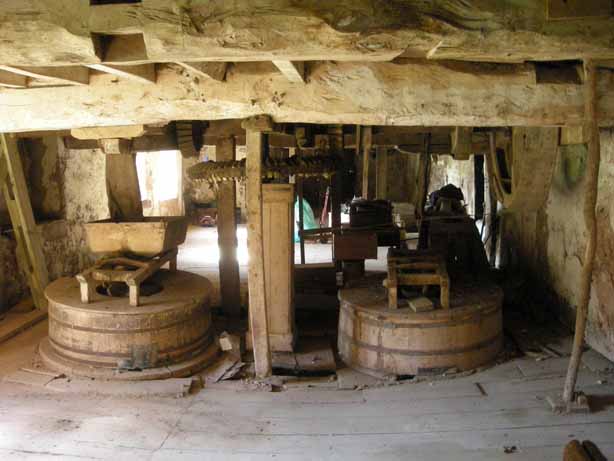
Town Mill Milverton |
| |
|
Hampshire Mills Group (HMG)
members devote considerable time and expertise to
the preservation and restoration of mills and
milling equipment. This ranges from giving
advice and searching historical records to hard
physical labour on site. We also venture far
and wide to enjoy viewing mills in other parts of
the UK and abroad. |
|
Hampshire
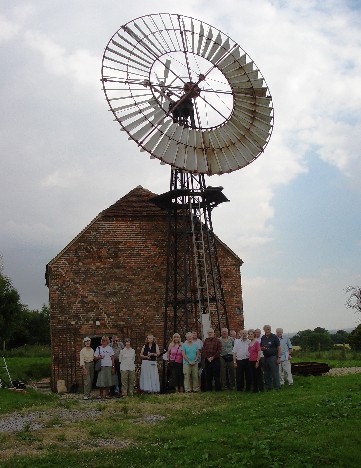
Mills Group at Crux Easton Wind Engine:
HMG
made a
trip on
Sunday 27th July,
2008.
We visited Crofton pumping station to see the
engines in steam, Wilton Windmill which was open,
but not turning as there was no wind and finally
Crux Easton Wind engine,
which again could not turn due to absence of any
wind. Our thanks to John Silman, who drove the bus
on a very warm day, and to Andy Fish for organising
the trip. |
 |
|
visit to the mills archive
HMG
helped make a dream become a reality as the first
mills-associated organisation to support Ron and
Mildred Cookson, with a £200 cheque, to set up The
Mills Archive as a database to be freely accessed by
anyone, anywhere in the world.
Needing to find a larger storage area
for their huge collection of photographs and
documents, the Cooksons launched the idea of a
central database for research into all types of
mills throughout Britain in April 2002.
|
 |
|
A further 30 collections were donated
and the resulting 75 boxes were moved to a low
ceilinged attic room in Watlington House.
One of our members in particular,
Tony Yoward, supplied literature and pictures from
the group’s
own archives, much of which had been researched by
Tony and his late wife, Mary. The Internet
Catalogue was launched in October 2003 and to date
there are 18,000 catalogue entries and 14,000
scanned images. There are also 4,000 reference
items.
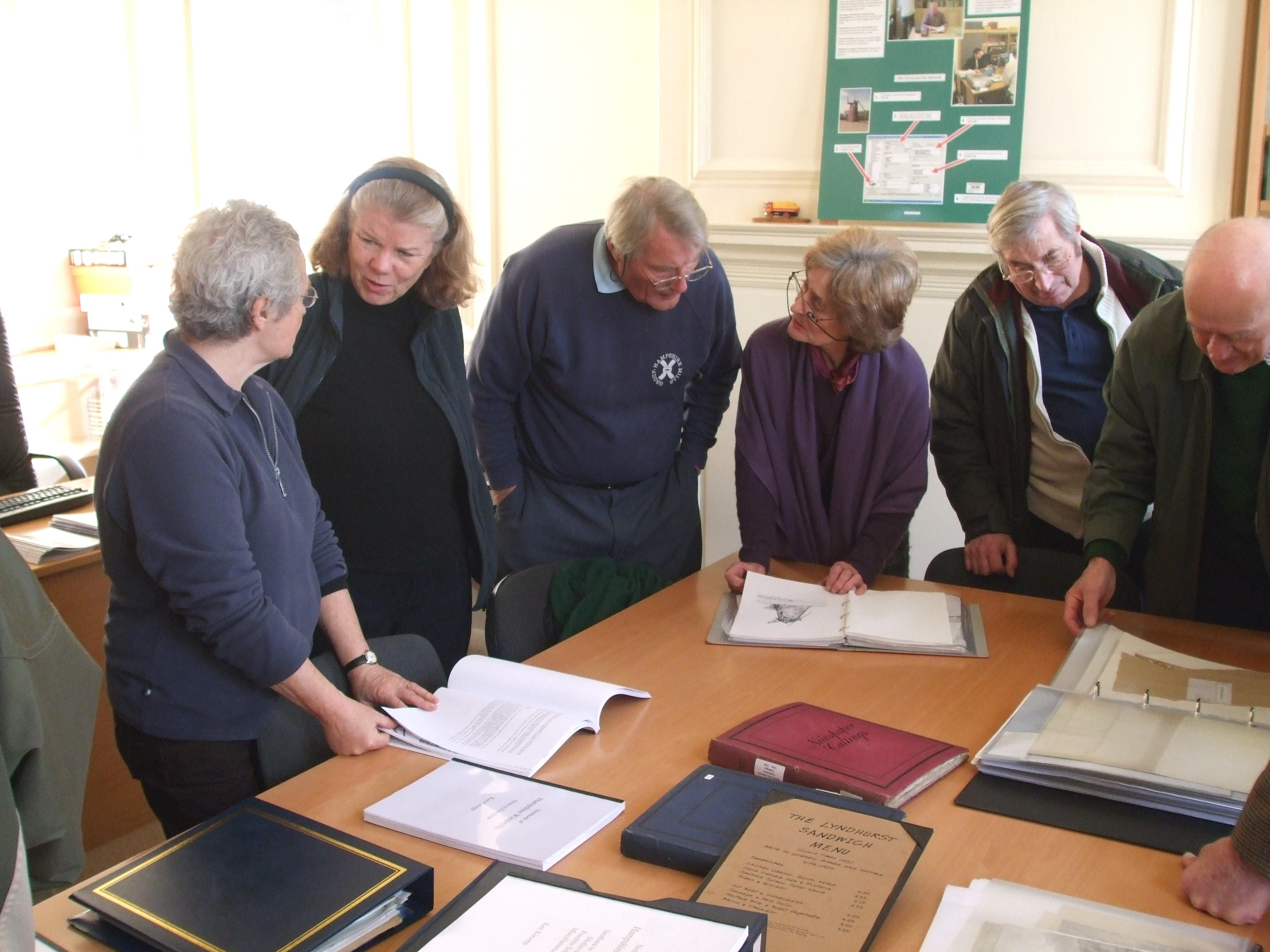
A large party of Hampshire Mills
Group members was recently treated to a tour of the
Archives and it’s
comprehensive library by Ron Cookson and two of his
volunteer team, Ken Kirsopp and Luke Bonwick. We
learned how vital correct storage and handling of
precious glass slides and delicate old documents is
necessary; Ken demonstrated how to access his
favourite and Luke talked us through the Archive
history and the way in which it works today.
Many
more volunteers are needed to cope with scanning the
huge volume of information into the website as well
as hosting visiting researchers to Watlington House
itself. To find out how to become a Friend of the
Mills Archive or to check out a mill go to
www.millsarchive.com.
Article by Sheila M Viner,
photo by Andy Fish
|
|
|

Copyright © 2022 Hampshire Mills Group
Registered as a Charity - 1116607 |
|